Apple AirPods Max 2 Review: Six Years Later, Was It Worth the Wait?
AirPods Max 2 get the H2 chip, better ANC, and lossless USB-C audio — but is $549 still worth it in 2026?

On This Page
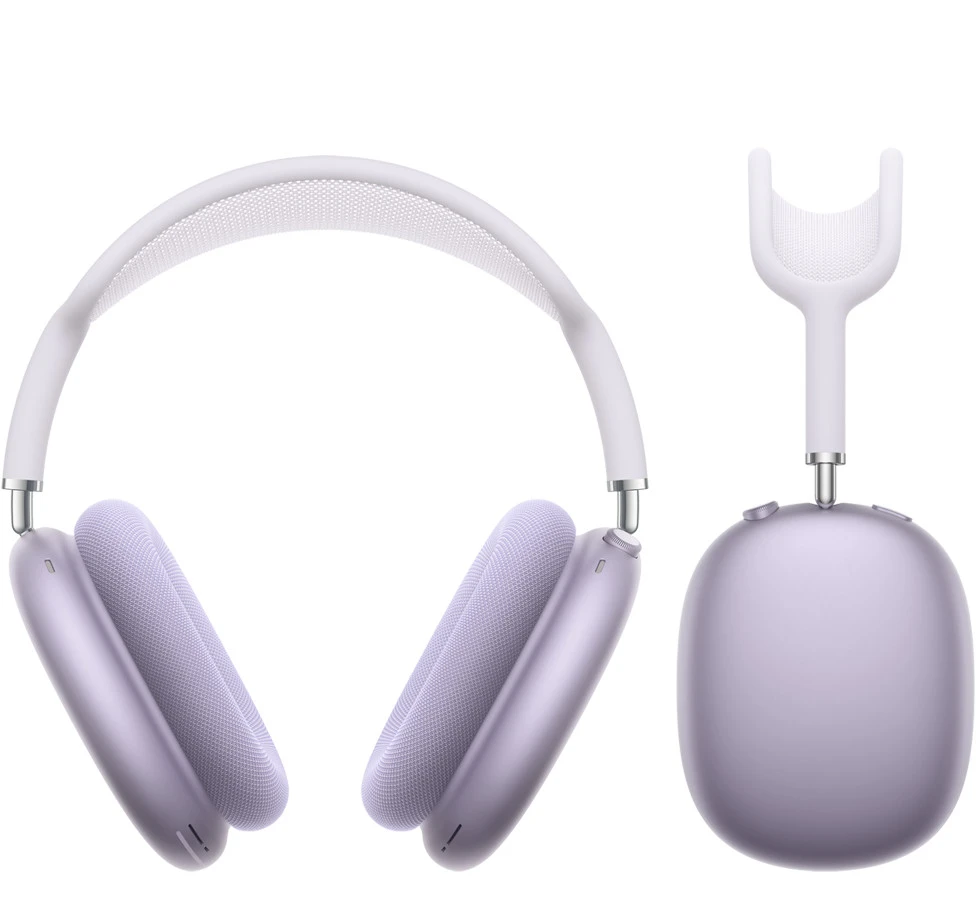
There is a particular flavor of tech anticipation that turns toxic after a while. You wait for one upgrade cycle, then two, then watch the spec sheets on every competing headphone leapfrog the thing you are loyal to. By 2025, AirPods Max owners had been carrying that weight for five years. The USB-C swap in 2024 barely counted as acknowledgment — it was more “we hear you” than “here you go.”
So when Apple quietly announced the AirPods Max 2 on March 16, 2026, the collective reaction across Reddit, YouTube, and every podcast I follow landed somewhere between relieved and suspicious. The H2 chip? Finally? The same chip that has been powering AirPods Pro 2 since late 2022? Yes — that one. And here is the thing: even arriving fashionably late to its own upgrade party, the H2 makes an enormous difference.
I have been wearing the AirPods Max 2 (in purple — the correct choice, fight me) for two weeks across commutes, long writing sessions, video calls, and one very long transatlantic flight. Here is everything you need to know before you drop $549 on these gorgeous, occasionally frustrating, sonically spectacular headphones.
Design: Frozen in Amber, and That Is Fine
Pick up the AirPods Max 2 and, if you ever held the 2020 originals, you will experience a disorienting sense of déjà vu. The telescoping stainless steel arms, the breathable mesh canopy, the magnetic ear cushions with their acoustic foam lining, the Digital Crown borrowed wholesale from Apple Watch — it is all here, untouched, exactly as it was six years ago.
That includes the infamous Smart Case, which continues to look like a piece of gym equipment and protect your $549 headphones about as effectively as a cloth napkin. Apple, I say this with love and frustration in equal measure: put a lid on it.
Available Colors: Midnight · Starlight · Blue · Purple · Orange — all five ship with a matching Smart Case and are available directly from Apple.com, the Apple Store app, and Amazon (currently $529.99 at Amazon, saving $19 off retail).
And yet. Hold these headphones and it is impossible not to feel the quality. The aluminum ear cups catch the light in a way that cheap competitors simply cannot fake. The fabric knitting on the ear pads is an underrated piece of Apple manufacturing craft — the “R” and “L” labels are not printed in white but knitted into the texture with a denser weave. Details like that do not show up in spec comparisons, but they live in your hands every single day.
The main physical criticism remains the weight: 385 grams. The Bose QuietComfort Ultra weighs 260 grams. If you wear headphones for four or more continuous hours — editing video, grinding through a long manuscript, flying coast-to-coast — the AirPods Max 2 will remind you that they exist in a way the Bose never will. This is not a dealbreaker for most people, but it is a real-world consideration Apple has declined to address for two generations running.
The H2 Chip: The Whole Point
Everything that makes the AirPods Max 2 meaningfully different from its predecessor lives inside the ear cups. Apple placed one H2 chip in each ear cup, and together they handle audio processing, noise cancellation algorithms, and the suite of intelligent features that transform these from excellent-sounding headphones into genuinely smart ones.
Active Noise Cancellation
Apple claims 1.5× improvement in ANC effectiveness over the first generation, powered by nine microphones — eight dedicated to noise cancellation and one directed at voice pickup. After two weeks of real-world use: the claim holds up. The gap is not subtle. Drop into a noisy coffee shop, activate ANC, and the ambient roar does not reduce — it nearly disappears. The baseline hum of a plane cabin collapses to near-silence in seconds.
For context, the original AirPods Max had genuinely good ANC for 2020. What the H2 chip delivers in 2026 is in a different tier — comparable to the best the Bose QC Ultra 2 offers, and competitive with (though not clearly ahead of) Sony’s XM6 in most real-world conditions.
Sound Quality: The Best Apple Has Ever Shipped
This is where the conversation shifts from “upgrade” to “genuinely excellent.” The H2 chip works alongside a new High Dynamic Range amplifier and an updated digital signal processing algorithm. The result is the finest wireless audio I have heard from any AirPods product, and among the best I have heard from any over-ear headphone regardless of brand.
Bass is richer — not inflated, not thumping for its own sake, but full and accurate. Vocals occupy their own space in the mix with a naturalness that makes well-recorded music feel intimate. Instrument separation on complex orchestral passages is impressive enough that I spent an embarrassing amount of time re-listening to albums I thought I knew well.
The new HDR amplifier also enables 24-bit/48kHz lossless audio via USB-C — a genuine first for AirPods Max. If you subscribe to Apple Music and care about lossless playback, the wired connection transforms these into a serious studio-adjacent monitoring tool. Content creators and musicians who need to work with Logic Pro will find the AirPods Max 2 fit naturally into their workflow for the first time.
Pro Tip for Audiophiles: Keep a USB-C cable in your bag. The jump from Bluetooth to wired lossless audio is not subtle — especially on Apple Music Lossless tracks. The first time you hear a well-recorded jazz album this way, you will understand why the $549 price tag becomes easier to rationalize.
Smart Features: Where the H2 Earns Its Keep Daily
The most underrated part of this upgrade is not the ANC numbers or the audio quality story. It is the three features you use without thinking, every single day.
Adaptive Audio is the headline addition and it earns the title. Rather than forcing you to choose between full ANC and full transparency, it blends the two modes in real time based on your environment. Walk from a quiet office into a busy hallway — the headphones shift before you consciously notice. Step outside onto a noisy street — it adjusts again. After two weeks, I stopped thinking about noise modes entirely, which is the highest compliment I can pay a technology.
Conversation Awareness automatically lowers playback volume when you begin speaking to someone nearby. It sounds like a gimmick. In practice, it has eliminated probably thirty seconds of fumbling per day — which, across a week, is several minutes of your life you get back. It also subtly enhances the voices around you so the exchange feels natural, not like listening through a wall.
Live Translation, powered by Apple Intelligence, provides real-time language translation directly in your ears during in-person conversations. My testing was limited to Spanish and French, where it performed impressively well in low-noise environments. At crowded events or anywhere with significant ambient audio, accuracy dropped noticeably. Treat this as a capable travel feature with room to grow, not a replacement for a translator in high-stakes situations.
Android Users, Listen Up: Nearly every smart feature listed above — Adaptive Audio, Live Translation, seamless device switching, Personalized Volume — requires an Apple device. If you are not inside the Apple ecosystem, the AirPods Max 2 is an expensive pair of headphones with decent ANC. The Sony WH-1000XM6 at $349 is almost certainly the better choice for you.
Battery Life: The One Thing That Has Not Changed
Twenty hours with ANC enabled. That is the number Apple is shipping in April 2026. It is the same number Apple shipped in December 2020.
The H2 chip is demonstrably more power-efficient than the H1 — you can observe this in AirPods Pro 3 and AirPods 4. Apple chose not to translate that efficiency into extended battery life, and the decision is baffling given where the competition currently sits.
| Headphone | Battery (ANC On) | Weight | Price | Lossless Audio |
|---|---|---|---|---|
| AirPods Max 2 | 20 hrs | 385g | $549 | USB-C wired |
| Sony WH-1000XM6 | 40 hrs | 254g | $349 | LDAC wireless |
| Bose QC Ultra 2 | 30 hrs | 260g | $379 | USB-C wired |
| Sennheiser Momentum 4 | 60 hrs | 293g | $349 | N/A |
The quick charge feature softens this considerably — five minutes gives you 90 minutes of playback, and I used this rescue charge more than once during the review period. But the fundamental ceiling of 20 hours is a real-world limitation for long-haul travelers or anyone who regularly forgets to charge overnight.
Who Should Buy the AirPods Max 2?
This is a question I spent more time on than any spec in this review, because the answer is narrower than the price tag suggests.
Buy them if you:
- Own an iPhone, Mac, and/or iPad and want the best-sounding, most seamlessly integrated audio experience Apple makes
- Are a content creator or musician who needs studio-quality monitoring and workflow integration with Logic Pro
- Already own first-generation AirPods Max and have felt the sting of missing Adaptive Audio and Conversation Awareness
- Prioritize sound quality over battery life, portability, or feature-per-dollar value
Skip them if you:
- Use Android — the smart features do not carry over, and your money goes significantly further elsewhere
- Log six-plus hour listening sessions regularly; the weight and 20-hour ceiling will frustrate you
- Are comparing dollar-for-dollar value; the Sony WH-1000XM6 at $200 less is simply a more rational purchase for most people
- Have been waiting for a lighter AirPods Max — supply chain analyst Ming-Chi Kuo has suggested that Apple may be targeting a lighter redesign for 2027. If weight is your primary concern, a second generation of patience might be warranted.
Final Verdict
The AirPods Max 2 are the headphones the original should have been two years into their life cycle. Apple took too long, changed too little of the physical product, and still cannot bring itself to add an IP rating or redesign that case. These are real frustrations at $549.
But sit down with a pair, put on music you love, and activate Adaptive Audio in a busy environment — and the argument for them crystallizes quickly. The H2 chip has not just improved these headphones; it has transformed their personality. They are no longer a beautiful object that plays audio well. They are an intelligent audio system that happens to be beautiful.
For Apple ecosystem users who have been patient, the wait is over. For everyone else, the Sony XM6 is on hold at your local Best Buy.
Where to Buy: Available at apple.com, Apple retail stores, and Amazon (currently $529.99). AppleCare+ is available for $2.99/month. New subscribers receive three free months of Apple Music with purchase.
Reviewed after two weeks of daily use across commutes, long writing sessions, video calls, and one transatlantic flight. Review unit purchased at retail price by the author.
Keep Reading on TraceRoute X
- 📱 Motorola Razr Ultra 2026: The Flip Phone That Wants to Rule Them All — Another premium device we’ve put through real-world testing. See how Motorola’s flip phone stacks up in 2026.
- 🚀 Web Development in 2026: The Era of Intent Over Implementation — The technology landscape driving the products we review — from AI integration to edge computing.
The Verdict
If you live inside the Apple ecosystem and have been holding out since the original 2020 AirPods Max, the wait is finally over. The H2 chip transforms what was a beautiful but feature-frozen luxury accessory into a genuinely smart, sonically excellent flagship. For everyone else — especially Android users or anyone watching their wallet — the Sony WH-1000XM6 at $200 less tells a more practical story. The AirPods Max 2 are not the perfect headphones, but they are the best pair Apple has ever shipped.
Price: $549 USD
The Good
- H2 chip delivers ANC that is genuinely 1.5× stronger — you feel it immediately in busy environments
- 24-bit/48kHz lossless audio over USB-C is a first for AirPods Max and a genuine win for audiophiles
- Adaptive Audio, Conversation Awareness, and Live Translation add real daily value — not just spec-sheet glamour
- Seamless multi-device switching across iPhone, Mac, and iPad remains class-leading and completely effortless
- Build quality is still exquisite — aluminum ear cups and breathable mesh headband feel luxurious in hand and on head
- Five-minute quick charge nets 90 minutes of playback, a lifesaver for commuters
The Bad
- Battery life is still 20 hours — unchanged since 2020, while Sony offers 40+ on the XM6 and Bose delivers 30
- At 385g, these remain the heaviest premium over-ear headphones on the market; fatigue arrives on long listening sessions
- The Smart Case design has not been touched — it offers minimal structural protection for a $549 product
- No IP rating for water or dust resistance is simply inexcusable at this price point in 2026
- Android users and ecosystem switchers get almost none of the smart feature value — $349 buys them more elsewhere
- The Digital Crown is still overly sensitive; a single careless spin sends volume from whisper to ear-splitting